 ObjectExplorer
Programs and libraries
exe dll sys efi so dylib o a lib wasm class pyc, and a program with no extension at all
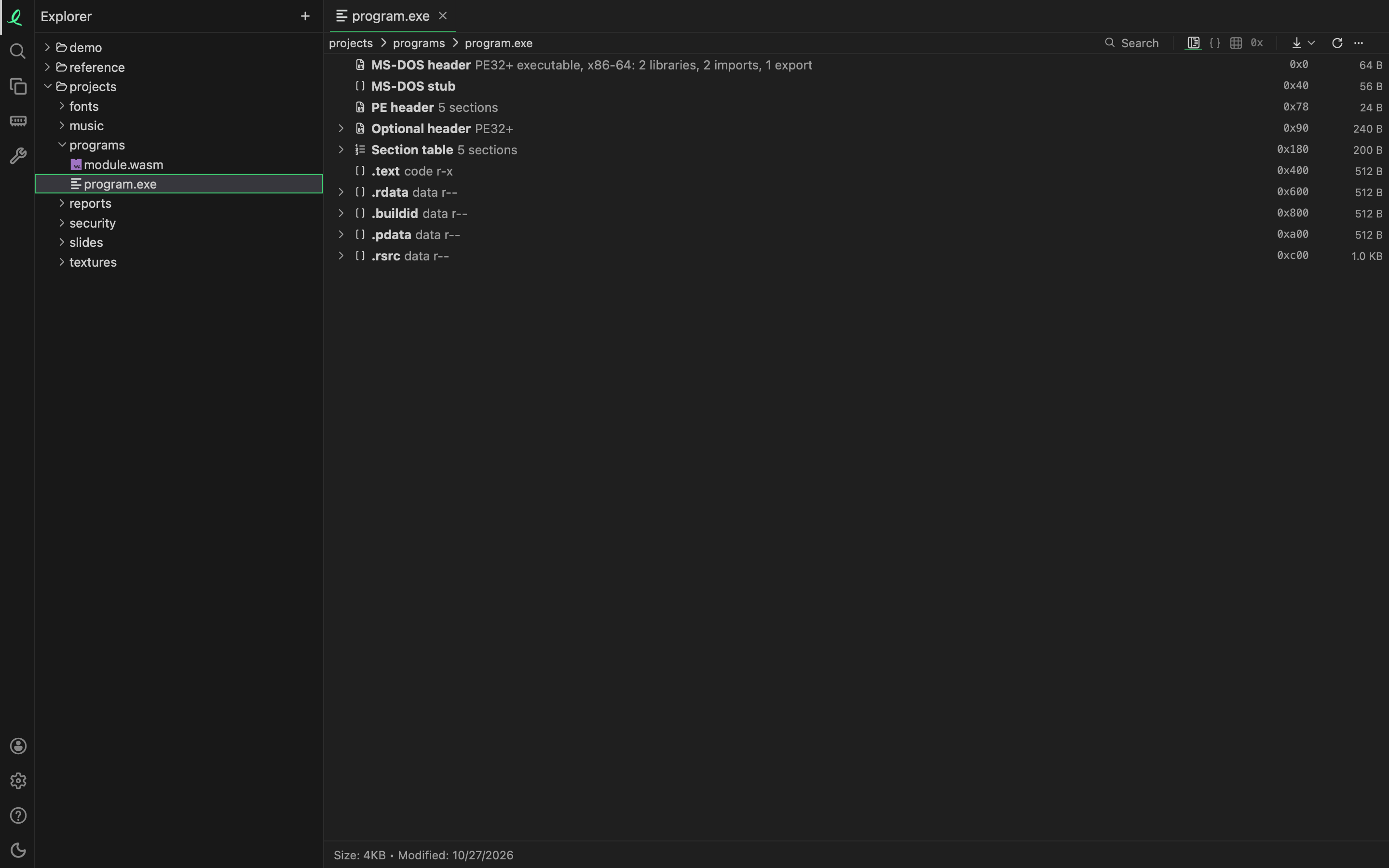
What a compiler and a linker write opens laid out as its structure: the headers, the sections and what each holds, at their offsets in the file — no objdump, otool or dumpbin, and on any platform, whichever one the file was built for. Which kind of file it is, its bytes decide, so a program with no extension opens the same way.
| File | What it shows |
|---|---|
Windows exe dll sys efi, and COFF objects | the machine and flags, the sections, the DLLs it imports from, its exports, its version strings; a .NET assembly's references |
Linux ELF: programs, so, o, core dumps | the machine and type, the sections and segments, the interpreter, the libraries it needs, its symbols |
Apple Mach-O: programs, dylib, bundles, o | the processor, load commands, segments and sections, linked libraries, symbols; each architecture of a universal file |
static and import libraries, a lib | its members and what each exports; for an import library, the DLL each function comes from |
WebAssembly wasm | its sections, types, imports, exports, functions by name, and data |
Java class | the class, its fields and methods written as Java writes them, and its constant pool |
Python 3 pyc | the Python version it was compiled for, and its code objects with their names and constants |
Each opens on structure, then as JSON and as a table of the same fields; hex is always there. Names are given as the format gives them — NX_COMPAT, EXECINSTR, LC_SEGMENT_64 — and a list longer than 20,000 names stops there and says so.
It is the file's layout, not its code: nothing is disassembled or decompiled, and a signature is noted, not checked. A .jar, .apk or .whl is a zip, and its classes open this way from inside it — see archives.
Next: Anki decks.